
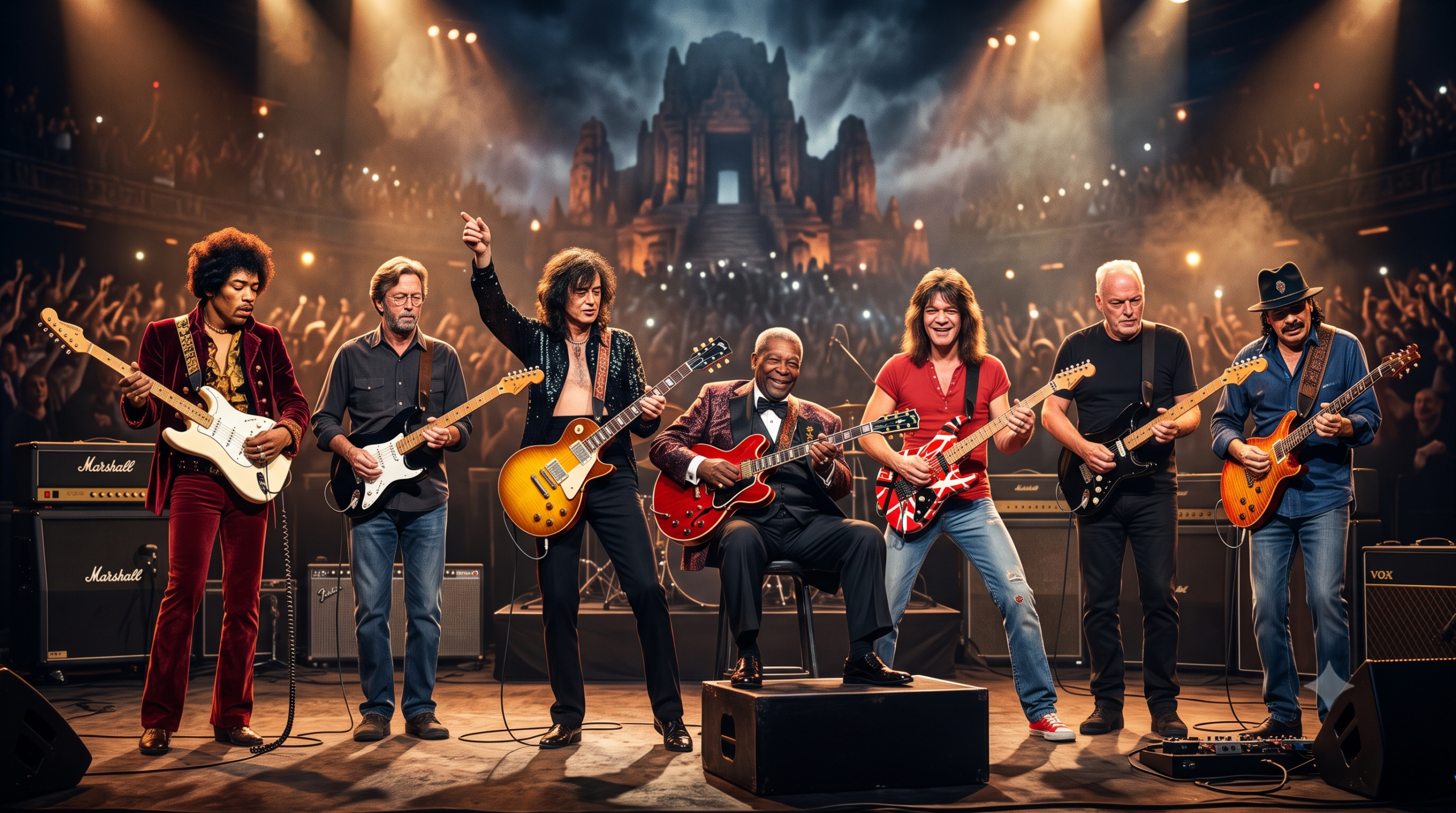
The electric and acoustic guitar holds a unique place in music history, serving as both a foundational rhythm instrument and a vehicle for unparalleled expressive soloing. From the raw energy of rock to the intricate melodies of jazz and the soulful cries of the blues, the guitar has shaped countless genres. While determining the best guitarists of all time is inherently subjective, certain musicians have undeniably transcended their craft, leaving an indelible mark on music and inspiring generations of players. This exploration delves into the criteria that define guitar greatness and highlights some of the legendary figures consistently cited among the most influential and skilled guitarists.
The Artistry Behind the Fretboard: Criteria for Legendary Status
What elevates a guitarist from proficient to legendary? It’s a complex interplay of factors that contribute to true guitar greatness. Technical proficiency, while important, is only one piece of the puzzle. Innovation plays a crucial role; the ability to push boundaries, invent new techniques, or redefine an instrument’s capabilities sets certain players apart. Influence on other musicians, both direct and indirect, is another key indicator of a guitarist’s impact. Many of the greatest guitar players have inspired countless others to pick up the instrument or to approach it from a new perspective.
Beyond technique and innovation, a guitarist’s contribution to songwriting, their unique tone, and their capacity for emotional expression are vital. A distinctive sound, instantly recognizable even without seeing the player, speaks volumes. Furthermore, the ability to convey deep emotion through a melody or a solo resonates profoundly with listeners. These diverse elements form the framework for evaluating the guitarist criteria that define the best guitarists of all time.
At a Glance: Legendary Guitarists Comparison Matrix
To understand how these virtuosos shaped modern music, here is a breakdown of their primary genres, signature equipment, and defining technical innovations:
| Guitarist | Primary Genre | Signature Instrument | Defining Technique / Sound |
| Jimi Hendrix | Psychedelic Rock / Blues | Fender Stratocaster (Reversed) | Feedback, Wah-Wah, Overdriven Fuzz |
| Eric Clapton | Blues Rock | Fender Stratocaster (“Blackie”) | Expressive Bends, “Woman Tone” |
| Jimmy Page | Hard Rock / Folk Blues | Gibson Les Paul Standard | Riff-driven arrangements, Violin bow technique |
| B.B. King | Electric Blues | Gibson ES-355 (“Lucille”) | String vibrato, “Singing” melodic phrasing |
| Eddie Van Halen | Hard Rock / Heavy Metal | Custom “Frankenstrat” | Two-handed finger tapping, Tremolo dive-bombs |
| David Gilmour | Progressive / Art Rock | Fender Stratocaster (“The Black Strat”) | Sustained solos, Atmospheric delay/reverb |
| Carlos Santana | Latin Rock / Fusion | PRS Custom Signature | Infinite sustain, Latin rhythmic integration |
Jimi Hendrix: The Revolutionary Virtuoso
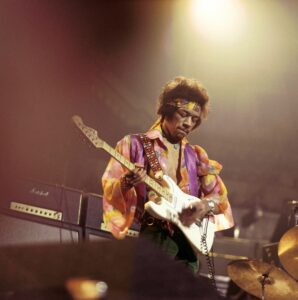
Jimi Hendrix performing live with his iconic Stratocaster setup. Source: David Redfern / Redferns
No discussion of the best guitarists of all time is complete without acknowledging Jimi Hendrix. His brief but explosive career redefined what was possible with an electric guitar. Hendrix was a revolutionary guitarist, pioneering the use of feedback, distortion, and the wah-wah pedal as integral parts of his musical expression rather than mere effects. His improvisational genius, combined with a raw, psychedelic blues-rock style, created a sound that was utterly unique. Tracks like “Purple Haze” and his iconic performance of “Star-Spangled Banner” at Woodstock showcase his unparalleled guitar innovation and stage presence. Hendrix’s legacy continues to influence rock music and guitarists worldwide.
Eric Clapton: Blues Rock Icon and Master of Tone
Often referred to as “Slowhand,” Eric Clapton’s journey through bands like The Yardbirds, Cream, and Derek and the Dominos, followed by a prolific solo career, solidifies his place among the best guitarists of all time. Clapton’s distinctive blues rock guitar style is characterized by its lyrical phrasing, tasteful bends, and a deeply expressive touch. His ability to convey emotion through his playing, often with a single, perfectly placed note, is legendary. His pursuit of the perfect guitar tone, particularly with his Fender Stratocaster, has inspired countless musicians. Clapton’s enduring contributions to the blues and rock genres are immense.
Jimmy Page: Architect of Iconic Rock Riffs
As the driving force behind Led Zeppelin, Jimmy Page crafted some of the most enduring and recognizable rock riffs in music history. His innovative approach to guitar arrangements, incorporating elements of blues, folk, and hard rock, was foundational to the band’s sound. Page experimented with various tunings, bow playing, and multi-tracked guitar layers to create a rich, expansive sonic landscape. His contributions extended beyond playing; as a producer, he meticulously shaped Led Zeppelin’s albums, ensuring his vision was fully realized. Page’s creativity and versatility firmly establish him as one of the best guitarists of all time.
B.B. King: The King of the Blues and His Signature Sound
Riley B. King, universally known as B.B. King, was a true titan of the blues. His soulful voice and distinctive guitar playing, often on his beloved Gibson ES-355 named “Lucille,” made him the undisputed blues guitar king. King’s playing style was characterized by his unique vibrato, sparse yet incredibly expressive phrasing, and the ability to make his guitar “sing.” He could tell an entire story with just a few notes, conveying joy, sorrow, and resilience. His influence stretches across generations, impacting countless rock and blues guitarists. B.B. King’s enduring legacy ensures his place among the best guitarists of all time.
Eddie Van Halen: The Technical Innovator
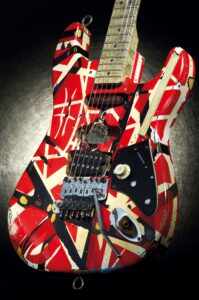
The iconic custom Frankenstrat guitar built by Eddie Van Halen. Source: Guitarist Magazine / Future via Getty Images
Eddie Van Halen revolutionized electric guitar playing with his explosive technique and boundless creativity. His signature two-handed tapping, dive bombs, and harmonic squeals pushed the boundaries of what was thought possible on the instrument. Van Halen’s approach was not just about speed; it was about integrating these advanced techniques into catchy, melodic compositions that defined the sound of hard rock and heavy metal for decades. His custom “Frankenstrat” guitar and innovative use of effects contributed to his unique sound. Eddie Van Halen’s unparalleled technical guitar prowess and influence make him one of the best guitarists of all time.
David Gilmour: Master of Melody and Emotion
With Pink Floyd, David Gilmour established himself as a master of atmospheric and deeply emotive guitar work. His solos are renowned for their soaring melodies, impeccable phrasing, and a profound sense of space. Gilmour prioritizes feeling and musicality over sheer speed, allowing each note to breathe and resonate. His distinctive tone, often achieved with a Fender Stratocaster and various effects, is instantly recognizable. Gilmour’s ability to craft solos that are integral to the song’s narrative, rather than just flashy displays, makes him a unique and beloved entry among the best guitarists of all time. His melodic guitar style is truly iconic.
Carlos Santana: Fusing Genres with Soulful Expression
Carlos Santana’s instantly recognizable tone and pioneering spirit have made him a global icon. He masterfully blends rock with Latin American jazz, blues, and African rhythms, creating a vibrant and soulful sound. Santana’s playing is characterized by its sustained notes, fluid phrasing, and a deep spiritual connection to the music. His ability to weave intricate melodies that are both powerful and deeply emotional has earned him a place among the best guitarists of all time. His Latin rock guitar style and soulful guitar expression continue to inspire and captivate audiences worldwide.
Anatomy of Tone: Gear & Equipment That Defined Generations
A guitarist’s fingers shape their expression, but their gear crafts their sonic signature. The legendary soundscapes of history were forged through breakthroughs in guitar amplification and pedal innovations:
- The Fuzz and Wah Overdrive (Hendrix): The Dallas Arbiter Fuzz Face combined with the Vox Wah pedal allowed Hendrix to push Marshall stacks into singing, harmonic saturation.
- The “Brown Sound” (Eddie Van Halen): By running a vintage Marshall Super Lead through a Variac transformer to drop the voltage, Eddie created a warm, saturated overdrive that revolutionized rock tone.
- Delay and Modulation Space (Gilmour): Gilmour utilized the Binson Echorec magnetic drum delay and MXR Phase 90 to build huge, cinematic acoustic landscapes.
Frequently Asked Questions About the Best Guitarists
Is there a definitive list of the best guitarists of all time?
No, there is no single, definitive list. Guitar greatness is subjective, influenced by personal taste, genre preferences, and criteria like technical skill, innovation, and emotional impact. However, certain names consistently appear on lists compiled by musicians, critics, and fans, reflecting their widespread influence and recognized talent.
What makes a guitarist truly great?
A truly great guitarist often combines exceptional technical ability with innovation, a unique and recognizable tone, significant influence on other musicians, and the ability to convey deep emotion through their playing. Their contributions often extend beyond just playing, impacting songwriting and production.
Who influenced these legendary players?
Many of these legendary guitarists were influenced by earlier blues masters like Robert Johnson, Muddy Waters, and John Lee Hooker, as well as jazz greats such as Charlie Christian and Django Reinhardt. Each player then built upon these foundations, developing their own unique voice.
How do modern guitarists compare to these iconic figures?
Modern guitarists continue to push boundaries, often incorporating new technologies and diverse musical styles. While they stand on the shoulders of these giants, contemporary players like John Mayer, Derek Trucks, and Tosin Abasi demonstrate incredible skill and innovation, ensuring the guitar’s evolution continues.
The Next Generation: How Contemporary Players Are Evolving the Instrument
While the golden era of rock and blues laid the groundwork, modern virtuosos are redefining what 6-string, 7-string, and 8-string instruments can achieve in a digital era:
- Polyphonic Percussive Fingerstyle: Players like Jon Gomm and Marcin Patrzalek use the acoustic guitar body as both a percussion instrument and melodic soundboard simultaneously.
- Modern Progressive & Math Rock: Instrumentalists such as Tim Henson (Polyphia) incorporate hip-hop dynamics, trap rhythms, and neo-classical hybrid picking to bring guitar-driven music back to mainstream popularity.
- Extended-Range Mastery: Tosin Abasi (Animals as Leaders) pioneered thumb-slapping techniques on 8-string electric guitars, bridging jazz harmony with modern progressive metal.
The Enduring Legacy of Guitar Legends
The musicians discussed here represent just a fraction of the incredible talent that has graced the world of guitar. From the raw power of rock guitar legends to the intricate improvisations of jazz guitar masters and the heartfelt cries of blues guitar heroes, each has contributed uniquely to the instrument’s rich tapestry. Their collective impact on music, their relentless pursuit of innovation, and their ability to inspire countless others solidify their status as guitar virtuosos. While the debate over the best guitarists of all time will always continue, the enduring legacy of these iconic guitarists and their unforgettable iconic guitar solos is undeniable. They have not only shaped genres but have also provided the soundtrack to generations, proving that the guitar remains a powerful voice in the human experience.