

How to Write a Novel Outline: The Ultimate Step-by-Step Guide
Starting a novel can feel like staring at a vast, empty ocean. Where do you begin? How do you navigate from a tiny spark of an idea to a finished manuscript? That’s where learning how to write a novel outline comes in. Think of it as your trusty map and compass, guiding you through the creative wilderness. It’s not about stifling creativity; it’s about providing a framework that makes the writing process smoother, more focused, and, dare we say, more enjoyable. Let’s explore how a good outline can transform your writing journey.
Why Outline Your Novel? The Benefits for Your Story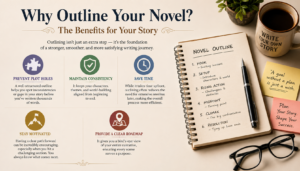
You might wonder if outlining is truly necessary. Many writers find that the benefits of outlining a novel are immense, saving them time and frustration in the long run. When you take the time to plan, you:
- Prevent Plot Holes: A well-structured outline helps you spot inconsistencies or gaps in your story before you’ve written thousands of words.
- Maintain Consistency: It keeps your characters, themes, and world-building aligned from beginning to end.
- Save Time: While it takes time upfront, outlining often reduces the need for extensive rewrites later, making the overall process of how to outline a book more efficient.
- Stay Motivated: Having a clear path forward can be incredibly encouraging, especially when you hit a challenging section. You always know what comes next.
- Provide a Clear Roadmap: It gives you a bird’s-eye view of your entire narrative, ensuring every scene serves a purpose.
Exploring Popular Novel Outlining Techniques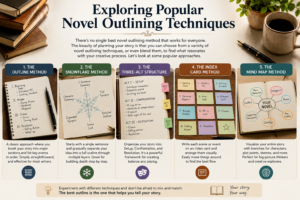
There’s no single best novel outlining method that works for everyone. The beauty of planning your story is that you can choose from a variety of novel outlining techniques, or even blend them, to find what resonates with your creative process. Let’s look at some popular approaches.
The Snowflake Method: Building Your Story Layer by Layer
The Snowflake Method is a highly structured approach that starts small and gradually expands. You begin with a single sentence summarizing your entire novel, then expand it into a paragraph, then a page, and so on. This method helps you build your story outline structure organically, ensuring each layer supports the one above it, from the big picture down to individual scenes.
The Three-Act Structure: A Classic Plot Outline for Novel
Perhaps the most famous framework, the Three-Act Structure divides your story into a beginning (Act I), a middle (Act II), and an end (Act III). It focuses on key turning points: the inciting incident, the rising action, the climax, and the resolution. This classic approach provides a solid plot outline for novel writers, ensuring a satisfying narrative arc.
The Hero’s Journey: An Archetypal Story Outline
Joseph Campbell’s Hero’s Journey describes a common pattern found in myths and stories across cultures. It involves a hero leaving their ordinary world, facing trials, and returning transformed. Using this as a story outline structure can provide a powerful, resonant framework for your narrative, guiding your character’s growth and the challenges they overcome.
Scene-by-Scene Outlining: Getting Granular
For those who prefer a detailed plan, a scene by scene outline novel approach breaks your story down into individual moments. For each scene, you might note: the point of view, the setting, the goal of the scene, the conflict, and the outcome. This level of detail ensures every beat of your story is purposeful and moves the plot forward.
Character-First Outlining: A Character Development Outline Approach
Some writers find their stories emerge from their characters. A character development outline focuses on creating rich, complex individuals first. You might explore their backstory, motivations, fears, desires, and how they will change throughout the novel. Once your characters are fully formed, their actions and reactions naturally drive the plot.
The Save the Cat! Beat Sheet: Pacing-Driven Outlining
Adapted from Blake Snyder’s renowned screenwriting methodology and popularized for novelists by Jessica Brody, the Save the Cat! Beat Sheet breaks a novel down into 15 specific structural beats. These include the Opening Image, Theme Stated, Setup, Catalyst, Debate, Break into Two, B Story, Fun and Games, Midpoint, Bad Guys Close In, All Is Lost, Dark Night of the Soul, Break into Three, Climax, and Final Image. This method is exceptionally powerful for writers who want to master pacing, maintain high engagement, and ensure emotional resonance throughout their book.
Tailoring Your Outline to Your Specific Genre
Different genres demand unique narrative rhythms and structural focal points. To make your outline truly effective, adapt your framework to match the expectations of your target genre:
- Mystery & Thrillers: Focus heavily on tracking the Clue Hierarchy, Red Herrings, and information reveals. Your outline must balance what the protagonist knows versus what the reader knows to maintain intense suspense.
- Romance: Map the Emotional Arc parallel to external events. Ensure key romantic beats are clearly defined: the Meet Cute, Adhesion/Forced Proximity, Midpoint Deepening Connection, The ‘Belief in Relationship Breaks’ Moment, and the Grand Gesture.
- Sci-Fi & Fantasy: Integrate World-Building Rules directly into your scene outlines. Plan where and how magic systems, technology, and lore are introduced without resorting to heavy info-dumps that derail plot momentum.
Crafting Your Novel Outline: A Step-by-Step Approach
Ready to start building your own roadmap? Here’s some practical advice on how to outline a book, regardless of which techniques you choose to incorporate.
- Start with Your Core Idea and Overall Story Outline Structure
Before diving into details, clarify your central concept. What’s your story about in one sentence? What are its main themes? Think about the overarching story outline structure you want to use – will it be linear, non-linear, or follow a specific framework like the Three-Act Structure?
- Develop Your Characters with a Detailed Character Development Outline
Spend time getting to know your characters. Who are they? What do they want? What stands in their way? A thorough character development outline includes their personality traits, relationships, internal and external conflicts, and their arc – how they will grow or change by the end of the story.
- Map Out Your Plot Points for a Solid Plot Outline for Novel
Identify the major events that will drive your story. These are your plot points: the inciting incident, rising action, turning points, climax, and resolution. Think about cause and effect – how does one event lead to the next? This helps build a robust plot outline for novel that keeps readers engaged.
- Weave Main Plots and Subplots Together seamlessly
A compelling novel is rarely a single straight line; it is a tapestry of interwoven storylines. Use your outline to track subplots (such as romantic arcs, interpersonal rivalries, or internal psychological battles) alongside the primary plot. Ensure that every subplot intersects with the main narrative at critical turning points to elevate the overall story tension.
- Consider a Simple Novel Outline Template to Get Started
Don’t feel pressured to create a complex outline from scratch. A simple novel outline can be just a list of chapters with a few bullet points for each. Many free resources offer a basic novel outline template that you can adapt to your needs. The goal is to organize your thoughts, not to create a rigid prison for your creativity.
Tools and Resources to Help You Outline Your Novel
Whether you prefer digital or analog, there are many tools to help you create your novel outline template. Software like Scrivener and Plottr are popular for their organizational features, allowing you to move scenes, characters, and notes around easily. Simple word processors, spreadsheets, physical notebooks, index cards, or even whiteboards can also be incredibly effective. Choose what feels most comfortable and intuitive for you.
Common Outlining Mistakes to Avoid
Even experienced authors can fall into planning traps. Keep these common pitfalls in mind when developing your novel outline:
- Over-Outlining (Creative Burnout): Spending months planning every minute detail, dialogue exchange, and world-building element can leave you exhausted before you even start writing Chapter One.
- Rigidity and Fear of Deviation: Treating your outline as an unalterable contract. If your characters naturally take a more interesting or logical path during drafting, allow yourself the flexibility to update the outline.
- Neglecting Character Internal Arcs: Focusing exclusively on external action events (explosions, clues, travel) while forgetting the character’s internal transformation and emotional journey.
Frequently Asked Questions About Novel Outlining
Is outlining necessary for every writer?
No, not every writer outlines, and some prefer to ‘pants’ their way through a first draft. However, many find that learning how to write a novel outline significantly streamlines the process and reduces the need for extensive revisions. It’s a personal choice!
How detailed should my novel outline be?
The level of detail is entirely up to you and your project. Some writers prefer a high-level overview, while others create a detailed scene by scene outline novel. Experiment with different novel outlining techniques to find your sweet spot.
Can I change my outline as I write?
Absolutely! An outline is a living document. It’s a guide, not a contract. As you write, new ideas will emerge, and your characters might take unexpected turns. Feel free to adapt and evolve your outline as your story develops.
What is the difference between a ‘Plotter’, a ‘Pantser’, and a ‘Plantser’?
A ‘Plotter’ meticulously outlines their story before writing. A ‘Pantser’ writes ‘by the seat of their pants’ with little to no prior planning. A ‘Plantser’ combines both approaches—creating a high-level framework or character map while leaving individual scene execution flexible.
Find Your Flow: How to Write a Novel Outline That Empowers Your Writing
Ultimately, learning how to write a novel outline is about finding a method that supports your unique creative process. Whether you meticulously plan every detail or prefer a looser structure, an outline can be a powerful ally. Experiment with different novel outlining techniques, borrow ideas, and adapt them to suit your story and your style. The goal is to empower your writing, not to constrain it. Happy outlining, and happy writing!