
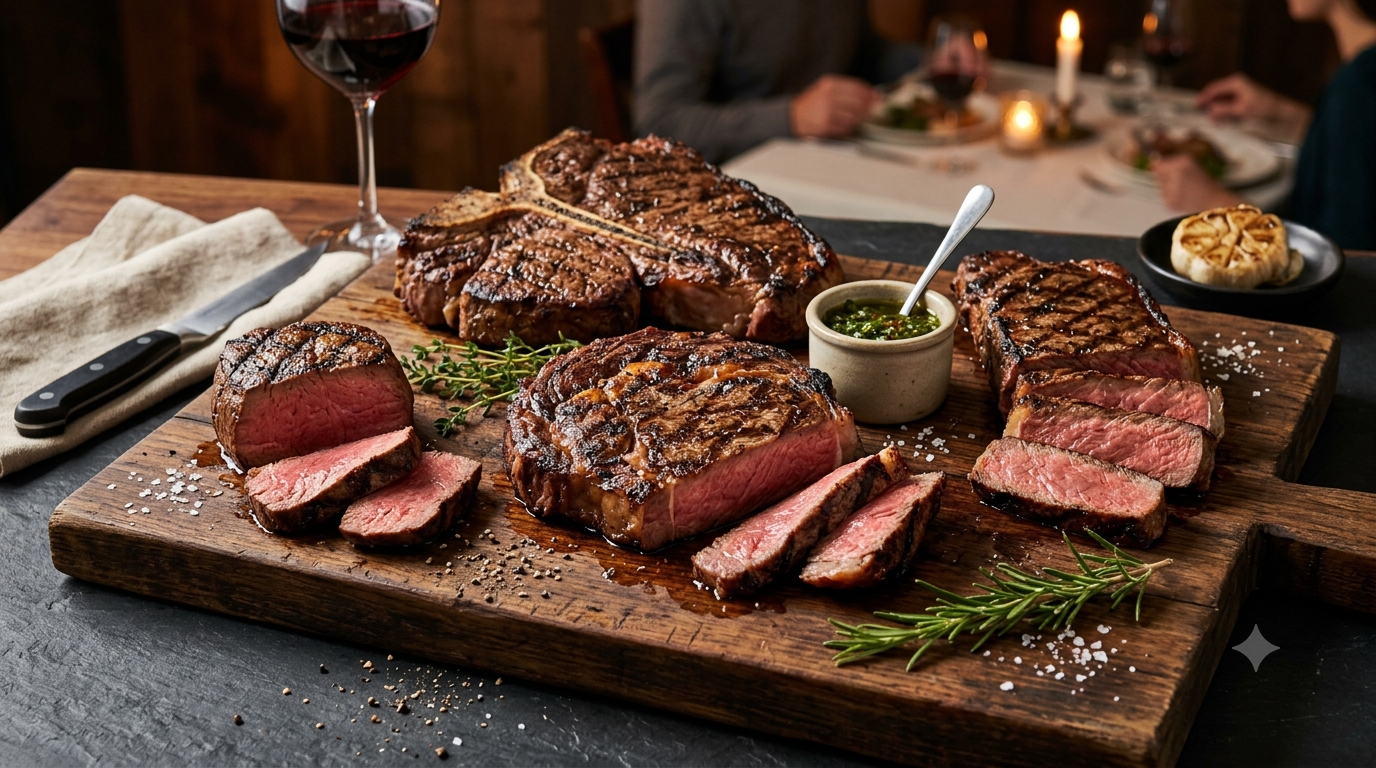
Understanding Steak Cuts: Where Flavor and Tenderness Begin
Best cut of steak ever. Wondered why some steaks are melt-in-your-mouth tender while others offer a robust chew? It’s all about the muscle’s origin. Less-used muscles are naturally more tender, while active ones are tougher. Marbling, the fat woven through the muscle, significantly contributes to a steak’s flavor and juiciness. Understanding these different types of steak cuts is key.
The Anatomy of a Great Steak: Tenderness, Marbling, and Texture
A great steak balances tenderness and rich flavor. Tenderness comes from less-active muscles (loin, rib areas). Flavor is heavily influenced by marbling – delicate fat streaks that melt during cooking, infusing moisture and a deep, beefy taste. Cuts with good marbling are often the most flavorful steak cuts. Bone-in cuts can also enhance flavor.
At a Glance: Steak Cuts Quick Reference Guide
To help you quickly decide which cut suits your taste buds and budget, here is a visual comparison matrix:
| Steak Cut | Tenderness Level | Marbling / Fat Level | Best Cooking Method | Price Range |
| Filet Mignon | Very High (5/5) | Low (1/5) | Pan-sear & Butter Baste | $$$$$ |
| Ribeye | High (4/5) | Very High (5/5) | Cast Iron Sear / High-Heat Grill | $$$$ |
| Porterhouse / T-Bone | High (4/5) | Medium-High (4/5) | Two-Zone Grilling / Broiling | $$$$ |
| Top Sirloin | Medium (3/5) | Moderate (2/5) | Grilling / Stir-fry / Sous Vide | $$$ |
| Flat Iron / Skirt | Medium-Low (2/5) | Variable (3/5) | Hot & Fast Flash Sear (Marinated) | $$ |
The Contenders: Top Steak Cuts for Every Preference
Now, let’s meet the popular cuts that might just be your personal best cut of steak.
For Unmatched Tenderness: The Filet Mignon
If tenderness is your top priority, the filet mignon is for you. This exquisite cut from the tenderloin is renowned for its buttery, fine-grained texture and mild flavor. It’s truly the most tender steak cut. Being lean, it benefits from quick cooking like pan-searing or grilling. In the filet mignon vs ribeye discussion, filet wins on tenderness.
For Rich Flavor and Juiciness: The Ribeye
For many, the ribeye reigns supreme. Known for its generous marbling, the ribeye delivers incredibly rich, beefy flavor and a wonderfully juicy texture. This intramuscular fat melts beautifully during cooking. Compared to leaner cuts, the ribeye offers a more intense flavor profile. The ribeye vs sirloin debate often centers on marbling and richness (ribeye) versus a leaner taste (sirloin). It’s fantastic for grilling or pan-searing.
The Best of Both Worlds: Porterhouse and T-Bone
Why choose when you can have both? Porterhouse vs t-bone cuts both feature a T-shaped bone separating a tenderloin and a strip steak. The key difference is the tenderloin size; a porterhouse has a larger portion. These impressive, large cuts are perfect for sharing, offering a delightful contrast between the buttery tenderloin and the firmer, flavorful strip. They excel when grilled or broiled.
The Versatile Workhorse: Sirloin
The sirloin is a fantastic all-rounder, balancing good flavor and leanness. It’s firmer than a ribeye or filet but still boasts a robust beefy taste without excessive fat. Its versatility makes it popular for various cooking methods, and many consider it the best steak for grilling due to its ability to develop a delicious crust. Comparing ribeye vs sirloin, sirloin provides a more straightforward beef flavor with less fat.
Budget-Friendly Bites: Affordable Steak Cuts That Deliver
You don’t need to break the bank for delicious steak. Several affordable steak cuts offer incredible flavor and can be wonderfully tender with the right preparation. Cuts like flat iron, flank, skirt, and chuck eye are great examples. These often benefit from marinades and are best cooked quickly over high heat, then sliced against the grain.
Beef Quality Grading Explained: Prime, Choice, Select & Wagyu
Understanding how beef is graded empowers you to choose the highest quality steak at the grocery store or butcher shop:
- USDA Prime: The highest tier, representing under 3% of all graded beef. Prime cuts feature abundant marbling and deliver exceptional flavor and moisture.
- USDA Choice: High quality with moderate marbling. Highly popular because it offers great flavor and tenderness at a accessible price point.
- USDA Select: Leaner beef with minimal marbling. It is tender enough for cooking but yields less rich flavor and juiciness.
- American & Japanese Wagyu: Renowned worldwide for extraordinary, dense intramuscular marbling. Japanese A5 Wagyu is the pinnacle, delivering an ultra-rich, melt-in-your-mouth flavor experience.
Mastering the Heat: How to Cook Your Chosen Steak
Once you’ve picked your cut, knowing how to cook steak properly is crucial. Bring your steak to room temperature, pat it dry for a better sear, and season generously. Pan-searing in a hot cast-iron skillet or cooking on a hot grill (making it the best steak for grilling for many cuts) are popular methods. Always let your steak rest for 5-10 minutes after cooking.
Pro Techniques: Seasoning, Butter Basting, and Resting Secrets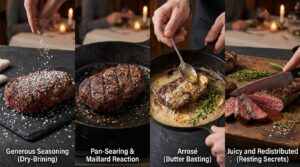
Take your home cooking from average to steakhouse-quality with these crucial chef techniques:
- Dry-Brining: Salt your steak generously 45–60 minutes (or overnight uncovered in the fridge) before cooking. This draws salt deep into the meat and dries out the surface to create a dark, crispy crust (Maillard reaction).
- Arrosé (Butter Basting): During the final minutes of pan-searing, add unsalted butter, crushed garlic cloves, and fresh rosemary or thyme to the pan. Tilting the skillet, spoon the hot foaming butter continuously over the top of the steak to cook it evenly and infuse aromatic flavor.
- Why Resting Matters: Cutting steak immediately after high heat causes liquid muscle fibers to contract, spilling delicious juices onto your plate. Resting for 5–10 minutes allows muscle fibers to relax and redistribute juices evenly throughout the cut.
Achieving the Perfect Doneness: A Quick Guide
The secret to a perfectly cooked steak lies in its internal temperature. A reliable steak doneness guide uses a meat thermometer.
- Rare: 120-125°F (49-52°C) – Cool red center
- Medium-Rare: 130-135°F (54-57°C) – Warm red center
- Medium: 135-140°F (57-60°C) – Warm pink center
- Medium-Well: 140-145°F (60-63°C) – Slightly pink center
- Well-Done: 150°F+ (66°C+) – Little to no pink
Pull your steak off the heat a few degrees before your target, as it will continue to cook while resting.
Complementary Pairings: Wine, Sauces, and Side Dishes
Turn your steak into a full fine-dining experience with these classic pairings:
- Classic Steak Sauces:
- Chimichurri: A bright, herbaceous Argentinian sauce made with fresh parsley, garlic, oregano, olive oil, and red wine vinegar—perfect for cutting through rich cuts like Ribeye or Skirt Steak.
- Béarnaise: A rich, velvety French emulsified sauce made with clarified butter, egg yolks, white wine vinegar, and fresh tarragon—a natural companion to Filet Mignon.
- Wine Pairings: Richer, high-fat cuts like Ribeye pair best with high-tannin red wines like Cabernet Sauvignon or Malbec. Leaner cuts like Filet Mignon pair nicely with lighter reds like Pinot Noir or Merlot.
- Essential Steakhouse Sides: Truffle garlic mashed potatoes, grilled asparagus, creamed spinach, or pan-roasted wild mushrooms.
Finding Your Personal Best Cut of Steak
Ultimately, the best cut of steak is a matter of personal taste. We’ve explored many different types of steak cuts, from the delicate filet to the robust ribeye. The real fun begins when you experiment! Try different cuts, cooking methods, and seasonings. Your favorite might change depending on your mood or the occasion.
Frequently Asked Questions About Steak Cuts
What is the most tender steak cut?
The most tender steak cut is generally the filet mignon (tenderloin), known for its incredibly soft, buttery texture due to coming from a less-worked muscle.
Is ribeye better than sirloin?
Whether ribeye vs sirloin is “better” depends on preference. Ribeye offers rich flavor and juiciness from marbling. Sirloin is leaner with a robust beefy taste. Choose ribeye for fat and flavor, sirloin for a classic, leaner beef experience.
What’s the best steak for grilling?
Many cuts are fantastic for grilling! The best steak for grilling often comes down to personal preference. Popular choices include ribeye, sirloin, porterhouse, and T-bone. Even flank or skirt steak can be amazing when marinated and cooked quickly.
How do I know if my steak is done?
The most accurate way is using a meat thermometer. Insert it into the thickest part, avoiding bone. Refer to a steak doneness guide for internal temperature ranges for rare, medium-rare, medium, and well-done.
Your Steak Adventure Awaits!
From the melt-in-your-mouth most tender steak cut like the filet mignon to the intensely flavorful ribeye, and the balanced versatility of sirloin, there’s a perfect steak out there for everyone. We hope this guide has given you the confidence to explore the many different types of steak cuts and find your personal best cut of steak. Enjoy your next delicious steak adventure!