
Table of Contents
ToggleIntroduction
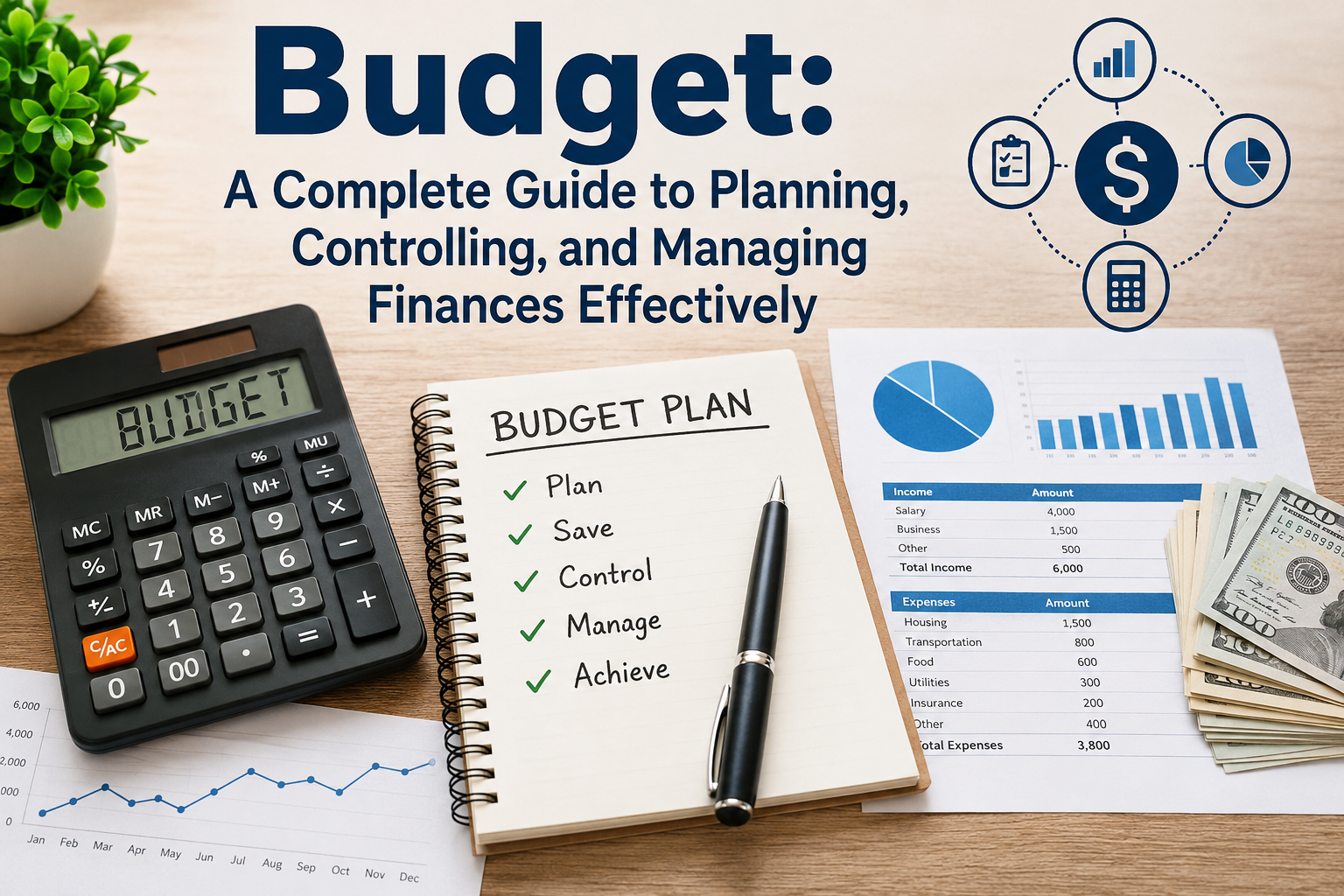
A budget is one of the most powerful financial tools used by individuals, businesses, and governments to plan their income and expenses. In simple terms, a budget is a written financial plan that outlines how money will be earned, spent, saved, and managed over a specific period of time. Whether you are managing household expenses, running a small business, or overseeing a large organization, budgeting plays a vital role in achieving financial stability and long-term success.
In today’s fast-changing economic environment, budgeting is no longer optional. Rising costs, uncertain income streams, and competitive markets make it essential to plan finances carefully. A well-prepared Financial plan helps you stay in control, reduce financial stress, and make informed decisions.
This article provides a complete, SEO-friendly guide on budgeting, covering all major types of budgets, their importance, and how they are used in real life. The main keyword Financial plan and all secondary keywords are used naturally to maintain readability and search engine optimization without over-optimization.
What Is a Financial plan
A Financial plan is a financial roadmap that estimates expected income and planned expenses for a defined period, such as a month, quarter, or year. It helps allocate resources efficiently while ensuring that spending does not exceed income.
The primary purpose of a Financial plan is not just to track money but to guide financial behavior. It allows individuals and organizations to prioritize goals, prepare for future needs, and monitor financial performance.
Importance of Budgeting
Budgeting is essential for several reasons:
Helps control unnecessary spending
Improves financial discipline and accountability
Supports better decision-making
Assists in goal setting and achievement
Prevents cash shortages and financial crises
Encourages savings and investments
Without a proper Financial plan, financial planning becomes reactive instead of proactive.
Financial plan Sales: Understanding the Sales Budget
A budget sales plan, commonly known as a sales Financial plan, is the foundation of business budgeting. It estimates the expected sales revenue for a specific period based on market trends, historical data, and business goals.
Sales Financial plan help businesses
Set realistic sales targets
Plan production and inventory
Forecast cash inflows
Evaluate sales performance
An accurate sales Financial plan ensures that other budgets, such as production and cash budgets, are prepared on realistic assumptions.
Production Financial plan
A production Financial plan outlines the number of units a business needs to produce to meet sales demand while maintaining desired inventory levels. It is closely linked to the sales Financial plan.
The production Financial plan helps:
Avoid overproduction or underproduction
Plan labor and material requirements
Control manufacturing costs
Ensure timely product availability
Manufacturing companies rely heavily on production Financial plan for operational efficiency.
Capital Financial plan
A capital Financial plan focuses on long-term investments such as machinery, buildings, technology, and infrastructure. These investments usually involve large amounts of money and provide benefits over several years.
Capital budgeting helps organizations:
Evaluate investment opportunities
Allocate funds wisely
Assess risks and returns
Plan long-term growth
Careful capital budgeting ensures that resources are invested in projects that add long-term value.
Cash Flow / Cash Financial plan
A cash flow Financial plan, also known as a cash Financial plan, estimates the inflow and outflow of cash over a specific period. It ensures that sufficient cash is available to meet day-to-day expenses.
Key benefits of a cash Financial plan include:
Preventing liquidity problems
Managing payment schedules
Planning short-term financing
Ensuring smooth business operations
Even profitable businesses can fail without proper cash flow management, making the cash Financial planextremely important.
Conditional Budgeting
Conditional budgeting involves preparing budgets based on specific conditions or scenarios. These budgets change depending on factors such as sales volume, market conditions, or economic changes.
Conditional budgets are useful when:
Business conditions are uncertain
Demand fluctuates frequently
Management wants flexibility in planning
This approach allows organizations to respond quickly to changes without financial disruption.
Marketing Budget
A marketing budget outlines the funds allocated for advertising, promotions, branding, and customer acquisition. It ensures that marketing efforts are cost-effective and aligned with business goals.
A well-planned marketing budget helps:
Improve brand visibility
Control promotional costs
Measure return on investment
Support sales growth
Marketing budgets are critical in competitive industries where customer attention is limited.
Project Budget
A project budget estimates the total cost of completing a specific project, including labor, materials, equipment, and overheads. It is commonly used in construction, IT, and development projects.
Project budgets help:
Track project expenses
Prevent cost overruns
Improve project planning
Ensure timely completion
Clear budgeting is essential for successful project execution.
Revenue Budget
A revenue budget estimates income from all sources, including sales, services, and other earnings. It provides a clear picture of expected financial inflows.
Revenue budgets are important because they:
Support financial forecasting
Guide expense planning
Help assess financial viability
Enable performance evaluation
Accurate revenue estimates lead to more reliable overall budgets.
Expenditure Budget
An expenditure budget details expected spending on operations, salaries, utilities, administration, and other expenses. It ensures that spending remains within limits.
This type of budget helps
Control costs
Allocate resources efficiently
Avoid unnecessary expenses
Maintain financial discipline
Governments and large organizations frequently use expenditure budgets for financial transparency.
Flexibility Budget
A flexibility budget, also known as a flexible budget, adjusts expenses based on changes in activity levels. Unlike fixed budgets, it adapts to actual performance.
Flexible budgets are useful for:
Performance evaluation
Cost control
Handling variable expenses
Adapting to changing conditions
This approach provides a more realistic comparison between planned and actual results.
Appropriation Budget
An appropriation budget allocates funds for specific purposes and restricts their use to approved activities only. It ensures accountability and proper fund utilization.
Appropriation budgets are commonly used in:
Government departments
Non-profit organizations
Large institutions
They help prevent misuse of funds and ensure financial discipline.
Performance Budget
A performance budget links financial resources to results and outcomes rather than just expenses. It focuses on efficiency and effectiveness.
Performance budgeting helps:
Measure productivity
Improve accountability
Align spending with goals
Enhance transparency
This budget type is widely used in public sector organizations.
Zero Based Budget
A zero based budget starts from zero each period, meaning every expense must be justified regardless of past spending. Unlike traditional budgets, it does not rely on previous figures.
Zero based budgeting helps:
Eliminate unnecessary costs
Improve cost efficiency
Encourage careful planning
Enhance financial control
Although time-consuming, it is highly effective in cost management.
Personal Budget
A personal budget is used by individuals or families to manage income, expenses, savings, and financial goals. It is essential for achieving financial security.
Personal budgeting helps:
Control daily expenses
Reduce debt
Build savings
Plan for future needs
A simple personal budget can significantly improve financial well-being.
Conclusion
A budget is more than just a financial document; it is a strategic tool that supports planning, control, and growth. From budget sales and production budget to personal budget and zero based budget, each type serves a unique purpose. Effective budgeting enables better financial decisions, reduces risks, and supports long-term success.
By understanding and applying the right type of budget, individuals and organizations can achieve financial clarity, stability, and confidence in an increasingly complex financial world.
Must Read: Hello World: A Complete Guide to Understanding the First Step in Digital Learnin