
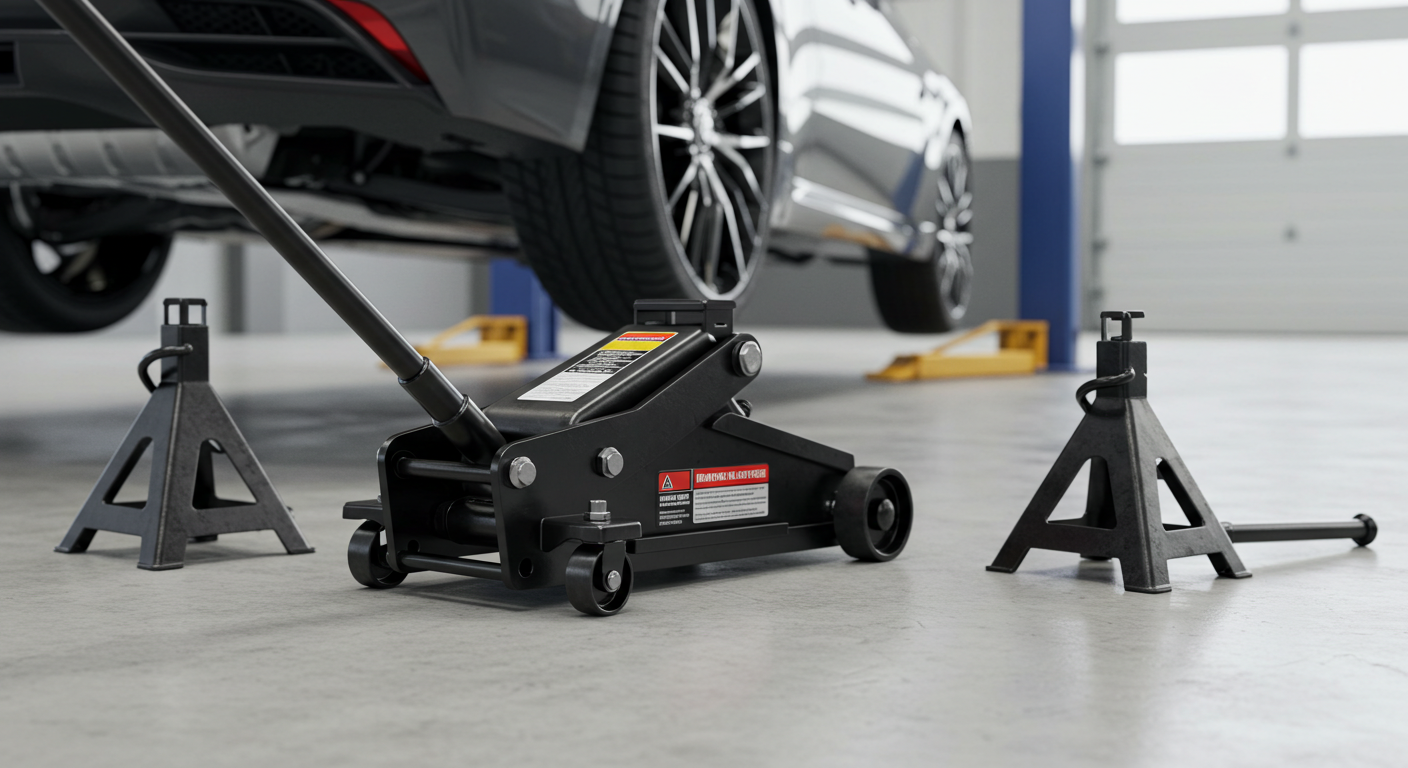
Understanding Car Jacks and Stands: Essential Tools for Every Garage
When preparing to work on a vehicle, two pieces of equipment are non-negotiable for safety: a car jack and stands. While often mentioned together, they serve distinct and equally vital roles. A car jack is designed to lift the vehicle, while jack stands are engineered to hold it securely in place once lifted. Relying solely on a jack for support is extremely dangerous and can lead to severe injury or death if the jack fails or slips.
What is a Car Jack?
A car jack’s primary function is to apply force to a specific point on a vehicle, raising it off the ground. This lifting action allows access to the undercarriage, wheels, or suspension components. Car jacks come in various designs, each suited for different applications and vehicle types. Their purpose is purely for lifting; they are not designed for sustained support.
The Critical Role of Jack Stands
Once a vehicle has been lifted by a car jack, jack stands become the critical safety component. These robust, adjustable supports are placed under designated points on the vehicle’s frame or chassis to bear its weight. They provide a stable, mechanical lock that prevents the vehicle from accidentally lowering, even if the car jack were to fail. Using jack stands is a non-negotiable safety measure whenever you plan to work under a lifted vehicle.
Exploring Types of Car Jacks and Stands
The market offers a variety of lifting equipment, each with specific advantages. Understanding the different types of car jacks and stands helps in choosing the most suitable tools for your garage and vehicle.
Common Car Jack Types
- Floor Jacks (Trolley Jacks): These are among the most popular for home garages due to their stability and ease of use. They typically feature a long handle and wheels, allowing them to be rolled under a vehicle. Floor jacks use hydraulic pressure to lift, making them efficient for heavier vehicles. When considering a hydraulic car jack review, factors like lift capacity, maximum lift height, and saddle design are often highlighted.
- Bottle Jacks: Compact and powerful, bottle jacks also use hydraulic pressure but have a vertical design, resembling a bottle. They are excellent for lifting heavy loads in confined spaces but require a higher clearance to fit under a vehicle initially.
- Scissor Jacks: Often included as standard equipment with vehicles for emergency tire changes, scissor jacks operate via a screw mechanism. They are lightweight and compact but generally have lower lifting capacities and can be less stable than hydraulic options.
- High-Lift Jacks (Farm Jacks): Designed for off-road vehicles or agricultural use, these jacks offer extreme lift heights and are capable of lifting vehicles from various points, including bumpers or wheels. They are not typically used for standard garage maintenance due to their specialized nature and potential instability on hard surfaces.
Popular Jack Stand Designs
Jack stands are categorized primarily by their locking mechanism:
- Ratchet-Type Jack Stands: These are the most common, featuring a height-adjustable post with a ratchet mechanism that locks into place. They offer quick and easy height adjustments.
- Pin-Type Jack Stands: Considered highly secure, pin-type stands use a solid metal pin inserted through holes in the post and base to set the height. This provides a robust, fixed support.
- Screw-Type Jack Stands: Less common, these stands use a threaded screw mechanism for precise height adjustment. They are generally very stable but slower to adjust.
Integrated Solutions: Floor Jack and Jack Stand Combos
For convenience and ensuring compatibility, many manufacturers offer a floor jack and jack stand combo. These kits typically include a hydraulic floor jack and a pair of matching jack stands, often with complementary weight capacities. Such combos are an excellent starting point for a home garage. Additionally, some brands offer portable car jack and stands sets, designed to be lightweight and compact for roadside emergencies or trackside adjustments, providing a complete lifting and support solution that is easy to transport.
Selecting the Right Car Jack and Stands for Your Vehicle and Garage
Choosing the correct lifting equipment is crucial for safety and efficiency. Several factors should influence your decision when purchasing a new car jack and stands.
Understanding Car Jack Weight Limits
The most critical specification for any lifting equipment is its weight capacity. Every car jack and stand has a maximum load it can safely support. It is imperative to select equipment with a capacity that significantly exceeds your vehicle’s curb weight. For instance, if your vehicle weighs 4,000 pounds, a jack with a 2-ton (4,000-pound) capacity might seem sufficient, but it’s safer to choose one with a 3-ton (6,000-pound) capacity to provide a safety margin. Always check your vehicle’s owner’s manual or a reliable online source for its curb weight. Ignoring car jack weight limits can lead to equipment failure and serious accidents.
Lift Height and Vehicle Clearance
Consider both the minimum and maximum lift height of the jack, as well as the height range of the jack stands. Low-profile sports cars require jacks with a low minimum saddle height to fit underneath, while SUVs and trucks need jacks that can reach higher jacking points and stands that can extend to provide adequate working clearance. Ensure the jack stands can be adjusted to a height that allows comfortable and safe work under the vehicle.
Durability and Material Quality
The construction material impacts both durability and portability. Steel jacks and stands are generally heavier and more robust, offering excellent stability and longevity. Aluminum options are lighter, making them easier to transport and maneuver, but may come at a higher cost and sometimes with slightly lower capacities. High-quality materials and construction ensure the equipment withstands repeated use and maintains its structural integrity.
Top Picks for the Home Garage
For those setting up a home workshop, the best car jack and stands for home garage typically involve a 2-3 ton hydraulic floor jack paired with a set of 3-ton ratchet-type jack stands. This combination offers versatility for most passenger vehicles, good lifting capacity, and ease of use. Look for features like a wide base for stability, a quick-lift mechanism on the jack, and sturdy construction on the stands.
Mastering Safe Operation: How to Use Car Jack and Stands Safely
Even with the right equipment, improper usage can be hazardous. Following a strict protocol for lifting and supporting a vehicle is essential. These steps outline how to use car jack and stands safely and integrate crucial car jack safety precautions.
Pre-Lift Safety Checks and Preparation
- Level and Stable Surface: Always work on a flat, hard, and level surface, such as a concrete garage floor. Avoid sloped driveways, dirt, or gravel, which can cause the jack or stands to shift.
- Engage Parking Brake: Ensure the vehicle’s parking brake is fully engaged.
- Chock Wheels: Place wheel chocks on the wheels that will remain on the ground, opposite the end of the vehicle being lifted. For example, if lifting the front, chock the rear wheels.
- Clear Work Area: Remove any obstructions or tripping hazards from around the vehicle.
- Inspect Equipment: Before each use, visually inspect your car jack and stands for any signs of damage, leaks (for hydraulic jacks), or deformation. Never use compromised equipment.
Proper Jacking Points and Technique
Locating the correct jacking points is vital. Refer to your vehicle’s owner’s manual for specific instructions. These points are typically reinforced areas on the frame, pinch welds, or suspension components designed to withstand the vehicle’s weight. Never place a jack under the engine, transmission, plastic body panels, or suspension arms not designed for lifting.
To lift:
- Position the car jack under the designated jacking point.
- Slowly and steadily pump the jack handle to raise the vehicle.
- Lift the vehicle only high enough to allow the jack stands to be placed underneath.
Correct Placement of Jack Stands
This is arguably the most critical step for safety. Once the vehicle is lifted, immediately place jack stands under the vehicle. The owner’s manual will also indicate where to put jack stands on a car. These are typically sturdy frame rails, subframe points, or reinforced pinch welds near the jacking points. Always use at least two jack stands per axle being lifted, placing them symmetrically on either side of the vehicle. Ensure the stands are fully engaged and locked at the desired height. Gently lower the car jack until the vehicle’s weight rests securely on the jack stands. Give the vehicle a slight shake to confirm stability before working underneath.
Lowering the Vehicle Safely
When your work is complete:
- Slightly raise the vehicle with the car jack to relieve pressure on the jack stands.
- Carefully remove the jack stands.
- Slowly and smoothly lower the vehicle to the ground using the jack’s release valve.
- Once fully lowered, remove the car jack and wheel chocks.
Maintenance and Storage for Longevity
Proper maintenance extends the life and ensures the reliability of your car jack and stands. For hydraulic jacks, periodically check and top off hydraulic fluid, and inspect for leaks. Keep all moving parts clean and lightly lubricated. Store all equipment in a clean, dry place to prevent rust and corrosion. Never leave a jack under load for extended periods, and always store jack stands in their lowest position to protect the ratchet mechanism.
Frequently Asked Questions About Car Jacks and Stands
What are the essential car jack safety precautions I should take?
Essential car jack safety precautions include working on a level, stable surface, engaging the parking brake, chocking the wheels, inspecting your equipment before use, and always using jack stands to support the vehicle’s weight once it’s lifted. Never work under a vehicle supported only by a jack.
How do I determine the correct car jack weight limits for my vehicle?
To determine the correct car jack weight limits, find your vehicle’s curb weight in the owner’s manual or online. Choose a jack and stands with a capacity that is at least 1.5 times your vehicle’s curb weight to provide a safe margin. For example, for a 4,000-pound vehicle, opt for 3-ton (6,000-pound) capacity equipment.
Where should I put jack stands on a car for maximum safety?
Always consult your vehicle’s owner’s manual to identify the designated jacking and support points. Generally, you should place jack stands under sturdy frame rails, subframe components, or reinforced pinch welds. Ensure they are placed symmetrically on a solid, level surface, and never under suspension components not designed for support or plastic body parts.
Are floor jack and jack stand combo kits a good option for home use?
Yes, a floor jack and jack stand combo kit is an excellent option for home use. These kits provide a convenient and often cost-effective way to acquire compatible lifting and support equipment. They are typically well-suited for general maintenance on most passenger vehicles and ensure you have both essential tools for safe operation in your home garage.
Conclusion: Prioritizing Safety with the Right Car Jack and Stands
Working on your vehicle can be a rewarding experience, but safety must always be the top priority. The correct selection and proper use of a car jack and stands are fundamental to preventing accidents and ensuring a secure working environment. By understanding the different types of equipment, adhering to weight limits, and meticulously following safe operating procedures, you can confidently perform maintenance tasks. Always remember that a car jack is for lifting, and jack stands are for supporting. Never compromise on safety when working under a vehicle.