
Table of Contents
ToggleIntroduction to Cyber Security
Cyber Security is one of the most important topics in the world of digital. Since we are living our lives increasingly online and online, the protection of our personal information and information regarding financial data as well as digital systems are more important than ever. From the smartphone and laptop to social media and cloud storage, every digital activity can be a source of risk. Security is the foundation which makes sure that online environments are safe and secure.
This article is an SEO-friendly, thorough guide to cybersecurity written in a clear and easy to understand written language. It covers the most essential terms such as types, threats and the most effective techniques, as well as the future of cybersecurity.
Cyber Security Solutions
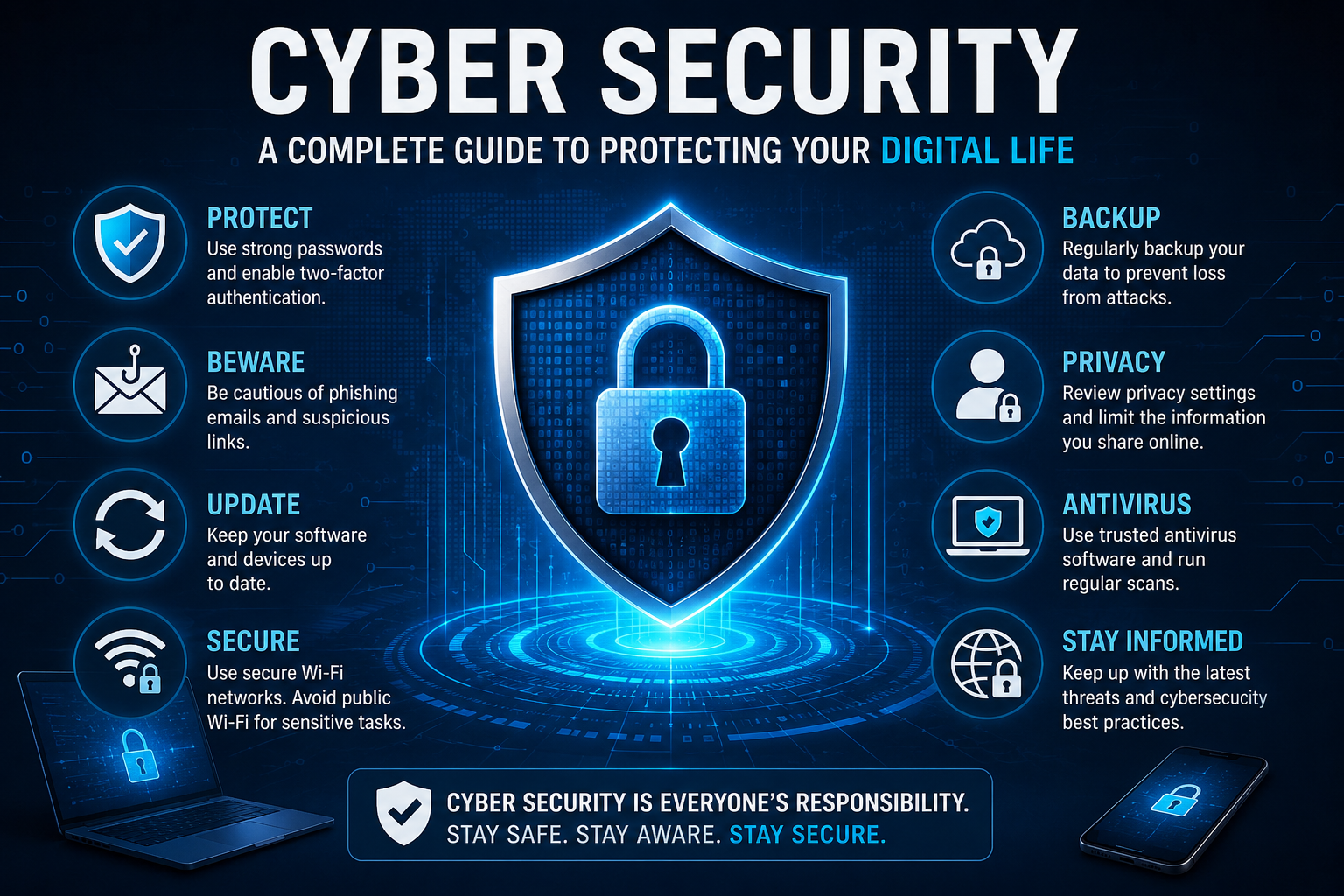
Cyber security solutions are essential for protecting your digital life from cyber threats, data breaches, malware, phishing attacks, and unauthorized access. As individuals and businesses increasingly rely on online platforms, cloud services, and connected devices, safeguarding sensitive information has become more important than ever. Effective cyber security involves a combination of technologies, practices, and awareness designed to protect data, devices, networks, and digital identities. Common solutions include antivirus software, firewalls, multi-factor authentication (MFA), encryption, secure backups, and regular software updates. Businesses may also use threat monitoring, vulnerability assessments, and endpoint protection to identify and respond to potential risks. Cloud-based security services, such as those offered by Amazon Web Services, provide additional tools for protecting applications, infrastructure, and stored data. By adopting reliable cyber security solutions and following safe online practices, users can reduce vulnerabilities, prevent common attacks, and maintain greater control over their digital information.
What Is Cyber Security and Why It Matters
Cyber security is the act of securing devices such as devices, networks and information from attacks by cybercriminals. The attacks tend to target to snoop on data, interfere with services or gain access with no permission to the systems. Cyber security is specifically focused on security of privacy as well as the integrity and accessibility to data.
The security of your data is an important problem that shouldn’t be ignored. Identity theft as well as cybercrimes and data breaches are on the rise every time. If there no effective cybersecurity strategy, people and companies are putting themselves at the threat of financial losses and reputational damage as well as legal ramifications. Cybersecurity ensures the security of electronic systems and aids in the advancement of technology in a secure manner.
Types of Cyber Security
Cyber security encompasses the entire spectrum of cyber security, with several levels. Each type of security is focused on protecting an area in the cyber world.
Network Security
Network security protects internal networks from being accessed by cyber-attacks and hackers. It includes firewalls and intrusion detection systems, along with a secure network architecture.
Application Security
Security for applications is concerned with protecting software and applications from security vulnerabilities. Regular updates will help stop hacker attacks.
Information Security
Data security guards sensitive data from being accessible by unauthorized individuals, or modifying or destroying. It covers information stored physically as well as digitally.
Cloud Security
Cloud security is a guarantee of the security of applications and data hosted on cloud platforms. It entails the security of access, encryption and monitoring of the environment of cloud.
Endpoint Security
Endpoint security protects devices such as smartphones or laptops against cyberattacks. Software for managing devices as well as antivirus tools play a crucial part to this.
Common Cyber Security Threats
Being aware of the dangers to cyber security could help in building stronger security. The most common cyber security threats include:
Malware
Malware is comprised of viruses, worms, in addition to ransomware and spyware. These malware-based applications harm the system or steal data.
Phishing Attacks
Phishing attacks trick users to share confidential information such as passwords and credit card numbers through fraudulent email addresses and sites.
Ransomware
Ransomware prevents access to systems or files and then asks for payment in order to gain access. It’s among the cyber security threats expanding at a rapid speed.
Insider Threats
Insider threats can happen when employees or trusted users misuse access, whether intentionally or not and cause security risks.
Denial of Service Attacks
These attacks can result in overloads on systems or networks rendering the service unusable to users.
How Cyber Attacks Happen
Cyberattacks typically are a result of vulnerabilities in the human or system behavior. Unsecure passwords and software that is outdated, weak networks, and lack of experience are the most common entry points to hackers. Social engineering techniques are used frequently to convince people to commit mistakes.
Attackers are constantly changing their strategies, so cyber security is a continual procedure instead of a single solution.
Importance of Cyber defense for Individuals
Cybersecurity isn’t just for big companies, but individuals are also at risk. Cyber defense for individuals safeguards identities online privacy, private conversations as well as financial information. Strong passwords and secure Internet connections, and awareness of cyber-criminals are essential to safeguard the privacy of your data.
With the rise of remote work, online access, and various other services, cybersecurity awareness has evolved into an important digital skill.Cyber security is crucial to Businesses and Organizations
For businesses, security is crucial to the security of operations as well as for customer trust. A single data breach can cause financial loss and damage to the image of a company’s brand. Companies rely on cybersecurity to safeguard of their customer’s information and intellectual property and their internal system.
Compliance with the regulations depends on the right cybersecurity procedures. Companies must comply with the laws governing security and data protection to avoid penalties.
Key Cyber Security Technologies and Tools
Cyber security of the present uses an various technologies to protect systems:
Firewalls are utilized to restrict the flow of network traffic
Secure data through encryption
Software for antivirus, malware and antivirus
Multi-factor authentication for control of access
System for security monitoring and emergency response
These tools can be put in conjunction to create a cyber security system that is multi-layered.
Best Cyber Security Practices
Secure cyber security robust relies on good behaviour and consistent practicing. Some of the most important cybersecurity best practices are:
Utilizing unique, secure passwords
Systems and software that are up-to-date
Enabling multi-factor authentication
Beware of downloads and links that look suspicious.
Securely keeping crucial information
Informing users of the threats in cybersecurity
These techniques lower the threat of cyberattacks and enhance the overall level of security.
Role of Cyber Security Awareness and Training
Human errors are one of the main causes of cybersecurity-related incident. Security awareness and education can help users recognize threats and act to protect themselves. Regular training sessions can improve the security culture of organizations and allow individuals to safeguard them online.
The knowledge of cyber security is transformed from being a matter of technical expertise to a matter of shared obligation.
Cyber Security Careers and Future Scope
Cyber security has fantastic career opportunities because of the increasing demands. The roles of cyber security analyst as well as security engineer penetration tester as well as penetration testers, risk manager, and risk management are sought-after throughout the world.
the future for cybersecurity will be focused on automation AI, artificial intelligence and the proactive security measures to detect threat. As technology develops, cybersecurity will continue be a vital field that has the potential for future growth.
Conclusion
Security is the base for the digital world. It safeguards your personal information, and businesses and the entire digital infrastructure from threats that never cease. With the ever-growing threat of cybercrime, security measures for cyberspace are not a luxury anymore but are a necessity.
By gaining a better understanding of cybersecurity threats, concepts and the most effective practices, businesses and individuals can build more safe online environments. By investing in cybersecurity awareness tools, techniques and resources, you can ensure an uncompromising and secure digital future for everyone.