
Keeping your car in great shape isn’t just about avoiding breakdowns; it’s about ensuring your safety, extending your vehicle’s life, and even saving money in the long run. Just like a regular health check-up for yourself, your car benefits immensely from consistent care. That’s where a good car maintenance checklist comes in handy. It helps you stay on top of what needs attention, preventing small issues from becoming big, expensive problems. This article will guide you through creating your own personalized checklist, packed with practical vehicle maintenance tips to keep your car reliable and ready for the road.
Why a Car Maintenance Checklist is Your Car’s Best Friend
Think of a well-followed car maintenance checklist as an investment in your vehicle’s future. Sticking to a routine car maintenance schedule offers a wealth of benefits. For starters, it significantly extends your car’s lifespan, meaning you can enjoy your ride for more years and miles. Regular checks also improve fuel efficiency, putting more money back in your pocket at the gas pump. More importantly, consistent maintenance helps prevent costly repairs down the line by catching potential issues early. And, of course, a properly maintained vehicle is a safer vehicle for you and your passengers. Following a clear car maintenance schedule ensures every critical component gets the attention it needs.
Quick Reference: Maintenance Schedule Overview
To help you quickly scan and plan your auto care, here is a master quick-reference summary breakdown of maintenance tasks by frequency.
| Frequency | Key Tasks / Inspections | Primary Benefit |
| Monthly | Tire pressure, Engine oil level, Coolant, Washer fluid, Lights | Prevents sudden breakdowns & improves fuel economy |
| Seasonal (6 Mo) | Battery check, Wiper blades, AC/Heater performance, Tire tread | Adapts vehicle safety to extreme weather conditions |
| Every 5,000–10,000 Miles | Oil & filter change, Tire rotation, Air filter replacement | Maintains engine health & prevents uneven tire wear |
| Every 30,000–100,000 Miles | Spark plugs, Timing belt, Transmission fluid, Brake pads/rotors | Prevents catastrophic engine/driveability failures |
Your Basic Car Maintenance Checklist: What to Check Regularly
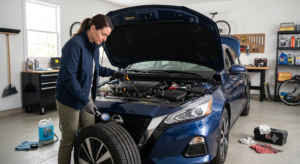
Even if you’re not a car expert, there are fundamental checks every car owner can and should perform. These form the core of any basic car maintenance checklist and cover the most frequent and crucial items that impact your car’s daily performance and safety. These essential car maintenance tasks are often quick but incredibly impactful.
Monthly Car Maintenance Checklist: Quick Checks for Peace of Mind
A quick once-a-month check can make a big difference. Here’s a simple monthly car maintenance checklist to keep things running smoothly:
- Tire Pressure: Check all four tires (and your spare!) to ensure they’re inflated to the manufacturer’s recommended pressure, usually found on a sticker inside the driver’s side door jamb or in your owner’s manual. Proper pressure improves safety and fuel economy.
Fluid Levels:
- Engine Oil: Check the dipstick to ensure the oil level is between the ‘min’ and ‘max’ marks.
- Coolant: Verify the coolant reservoir is at the appropriate level.
- Windshield Washer Fluid: Top this up regularly, especially before long trips.
- Brake Fluid & Power Steering Fluid: Check these levels, but if they’re consistently low, it might indicate a leak or a problem that needs professional attention.
- Exterior Lights: Walk around your car and check that headlights (high and low beams), tail lights, brake lights, turn signals, and hazard lights are all working correctly.
These simple steps are a great start to any basic car maintenance checklist.
Essential DIY Tools & Items to Keep in Your Car 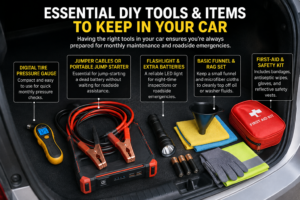
To execute your monthly and emergency checks efficiently, competitors often miss listing the basic toolkit every driver should store in their trunk. Having these items ensures you are never stranded:
- Digital Tire Pressure Gauge: Compact and easy to use for quick monthly pressure checks.
- Jumper Cables or Portable Jump Starter: Essential for jump-starting a dead battery without waiting for roadside assistance.
- Flashlight & Extra Batteries: A reliable LED light for night-time inspections or roadside emergencies.
- Basic Funnel & Rag Set: Keep a small funnel and microfiber cloths to cleanly top off oil or washer fluids.
- First-Aid & Safety Kit: Includes bandages, antiseptic wipes, gloves, and reflective safety vests.
Seasonal Car Maintenance Checklist: Preparing for Changing Weather
As the seasons change, so do your car’s needs. A seasonal car maintenance checklist helps you prepare for different weather conditions:
Before Winter:
- Battery Health: Cold weather is tough on batteries. Have your battery tested by a professional to ensure it can handle the chill.
- Antifreeze/Coolant: Ensure your coolant mixture is appropriate for freezing temperatures.
- Wiper Blades: Replace worn blades for clear visibility in snow and rain.
- Winter Tires: Consider switching to winter tires for better traction in icy or snowy conditions.
Before Summer:
- AC Performance: Test your air conditioning. If it’s not blowing cold, have it inspected.
- Tire Condition: Inspect tires for wear and tear, as hot pavement can exacerbate issues.
- Fluid Levels: Ensure all fluids are topped off, as engines work harder in the heat.
These vehicle maintenance tips help your car adapt to the elements.
Spring & Autumn Transition Checklist
While winter and summer get the most focus, transitional seasons are equally vital to prevent long-term wear:
- Spring Undercarriage Wash: Thoroughly wash the undercarriage to remove harsh winter road salt, which causes severe frame and brake line corrosion.
- Spring/Autumn Cabin Filter Replacement: Pollen counts spike in spring and leaves clog vents in autumn—replace filters to ensure clean cabin air and proper defrosting.
- Autumn Drain Clearing: Falling leaves can clog windshield cowl drains, causing water to pool inside the engine bay or dashboard electronics.
Essential Car Maintenance Tasks: Beyond the Quick Checks
While monthly and seasonal checks are vital, some essential car maintenance tasks occur less frequently but are equally critical. These are integral parts of a comprehensive car maintenance schedule and contribute significantly to routine car maintenance.
Understanding Your Car Maintenance Schedule: Following Manufacturer Guidelines
The most accurate and personalized car maintenance schedule for your vehicle is found in your owner’s manual. This guide outlines specific service intervals for items like:
- Oil Changes: Typically every 5,000 to 10,000 miles, depending on your car and oil type.
- Filter Replacements: Engine air filter, cabin air filter, and fuel filter all have recommended replacement intervals.
- Spark Plugs: These can last anywhere from 30,000 to 100,000 miles.
- Timing Belt/Chain: A critical component with a specific replacement mileage (e.g., 60,000-100,000 miles). Ignoring this can lead to catastrophic engine damage.
- Brake Pad and Rotor Inspection/Replacement: Varies greatly based on driving habits.
Following these manufacturer guidelines is crucial for maintaining your warranty and ensuring optimal performance.
DIY Car Maintenance Checklist: Tasks You Can Tackle Yourself
Many maintenance tasks don’t require a mechanic. Here’s a DIY car maintenance checklist of items you can confidently perform:
- Checking and topping off fluids (oil, coolant, washer fluid).
- Replacing the engine air filter and cabin air filter.
- Inspecting belts and hoses for cracks or wear.
- Checking tire tread depth with a penny.
- Replacing wiper blades.
- Cleaning battery terminals (with proper safety precautions).
These hands-on vehicle maintenance tips can save you money and give you a better understanding of your car.
Understanding Dashboard Warning Lights: What They Mean
Top-ranking competitor articles neglect educating drivers on dashboard indicator lights. Recognizing these signals early prevents total roadside breakdowns:
- Oil Pressure Light (Oil Can Icon): Indicates low oil pressure. Pull over immediately and turn off the engine to prevent total engine destruction.
- Check Engine Light (Engine Outline): Signals a problem with the engine, emission control system, or sensors. Have it scanned with an OBD-II scanner as soon as possible.
- Brake System Warning Light (Exclamation Mark in Circle): Warns of low brake fluid levels, worn brake pads, or an ABS system failure. Requires immediate mechanic inspection.
- Battery/Charging Light (Battery Icon): Means your alternator is not charging the battery. Your vehicle is running on reserve battery power and will shut off shortly.
The Comprehensive Car Inspection Checklist: What Professionals Look For
While DIY checks are great, periodic professional inspections are indispensable. A professional car inspection checklist covers areas that require specialized tools and expertise. They’ll examine:
- Brakes: Pads, rotors, calipers, and brake lines.
- Suspension System: Shocks, struts, and linkages for wear.
- Exhaust System: For leaks, rust, or damage.
- Steering Components: Tie rods, ball joints, and power steering system.
- Underbody: For rust or damage.
- Diagnostic Checks: Using specialized equipment to read error codes and assess engine performance.
If you notice unusual noises, smells, or warning lights, it’s time to consult a professional. A thorough car maintenance checklist includes knowing when to seek expert help.
New Car Maintenance Checklist: Keeping Your Investment Pristine
If you’ve recently purchased a vehicle, a new car maintenance checklist has some unique considerations. Adhering to the manufacturer’s recommended service intervals is paramount, especially for warranty requirements. Missing scheduled services can void parts of your warranty. Pay close attention to initial service intervals, which might include an early oil change or inspection. Protecting your vehicle’s value also means addressing minor issues promptly and keeping up with the recommended car maintenance schedule from day one.
Electric Vehicle (EV) & Hybrid Maintenance Considerations
Modern auto content must address Electric Vehicles and Hybrids to outperform outdated competitor guides. If you drive an EV or Hybrid, your checklist differs slightly:
- Regenerative Braking Systems: EVs use regenerative braking, meaning traditional brake pads last significantly longer but fluid and lines still require annual checks.
- Battery Thermal Management Coolant: Ensure battery coolant loops are flushed according to manufacturer specs to prevent high-voltage battery overheating.
- Accelerated Tire Wear Checks: EVs are heavier and deliver instant torque, leading to faster tire wear. Rotate tires strictly every 5,000 miles.
Frequently Asked Questions About Car Maintenance
Here are some common questions about keeping your car in top shape:
Q: How often should I get an oil change?
A: It depends on your car’s make, model, and the type of oil used. Modern cars often go 5,000 to 10,000 miles between changes. Always check your owner’s manual for the precise recommendation.
Q: What are the most important things to check on my car?
A: Tire pressure, fluid levels (oil, coolant, brake fluid), and all lights are crucial for safety and performance. These are key components of any essential car maintenance tasks list.
Q: Can I skip maintenance to save money?
A: Skipping maintenance often leads to more expensive repairs down the road. Regular maintenance is an investment that prevents major failures and keeps your car running efficiently, ultimately saving you money.
Q: What’s included in a basic car maintenance checklist?
A: A basic car maintenance checklist typically includes checking tire pressure, fluid levels, lights, wiper blades, and listening for unusual noises. It’s about proactive, simple checks.
Q: How do I know when my brake pads need to be replaced?
A: Listen for a high-pitched squealing noise when applying brakes (caused by built-in wear indicators). If you hear a harsh grinding sound, your pads are completely worn out, which damages the rotors and requires immediate repair.
Q: Does severe driving affect my maintenance schedule?
A: Yes. Driving in extreme temperatures, frequent short trips under 5 miles, heavy stop-and-go traffic, or towing loads qualifies as ‘severe conditions.’ Under these conditions, manufacturers recommend cutting oil change and filter replacement intervals in half.
Drive Confidently with Your Car Maintenance Checklist
Taking a proactive approach to your vehicle’s health with a personalized car maintenance checklist is one of the smartest things you can do as a car owner. By regularly performing these checks and following a consistent schedule, you’ll not only extend the life of your car but also enjoy greater peace of mind on every journey. Use these vehicle maintenance tips to keep your car in top shape, ensuring it’s always ready for your next adventure.