
Understanding the Fundamentals of Piano Tuning
How to tune a piano yourself: a basic guide. Before attempting any adjustments, grasping the core principles of sound and pitch is essential for effective piano tuning basics. A piano’s sound is produced by hammers striking strings, and the tension of these strings directly dictates the note’s piano pitch.
The Mechanics of Piano Sound Production
At its core, the piano sound mechanics involve a complex interplay of components. When a key is pressed, a hammer is propelled to strike one or more strings. The vibration of these strings creates sound waves. The frequency of these vibrations determines the pitch of the note. Thicker, longer, or looser strings vibrate slower, producing lower pitches, while thinner, shorter, or tighter strings vibrate faster, resulting in higher pitches. Adjusting the string tension is the primary method for altering a note’s pitch during tuning.
Essential Tools for Basic Piano Tuning
To embark on basic piano tuning, you will need specific piano tuning tools. These are fundamental for making precise adjustments:
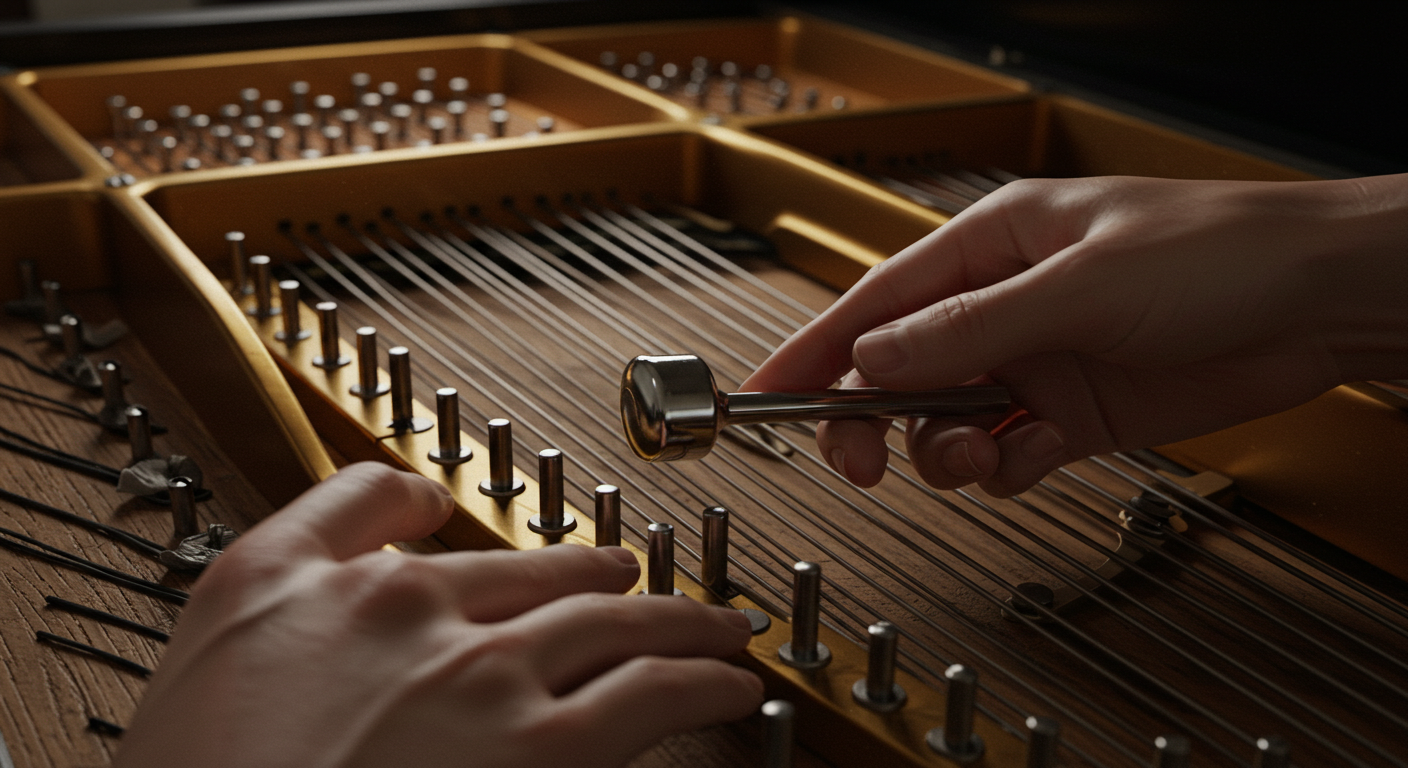
- Tuning Hammer (or Tuning Lever): This specialized wrench fits onto the tuning pins. Its design allows for fine, controlled movements to adjust string tension.
- Rubber Mutes or Felt Strips: These are used to silence adjacent strings, allowing you to isolate and tune individual strings within a unison.
- Electronic Tuner: A high-quality electronic tuner is crucial for accurately measuring pitch. Many dedicated piano tuning apps are available for smartphones, or you can use a standalone chromatic tuner.
- Headphones: Using headphones with your electronic tuner can help isolate the sound of the string you are tuning, reducing interference from ambient noise.
Preparing Your Piano for Tuning
Proper preparation is key to successful tuning. Before you begin the actual process, several steps can help prepare piano for tuning and ensure the best possible outcome. This also falls under general piano maintenance practices.
Environmental Stability and Piano Condition Checks
Pianos are sensitive to their environment. Stable temperature and humidity are critical; significant fluctuations can cause wood to expand or contract, affecting string tension and tuning stability. Ideally, a piano should be in a room with consistent conditions for at least 24 hours before tuning. Additionally, perform a visual inspection of your piano. Check for any loose tuning pins, which might indicate a need for professional attention, or broken strings. Attempting to tune a piano with structural issues can cause further damage.
Step-by-Step: How to Tune a Piano Yourself
This section provides a detailed, sequential guide on the practical process of DIY piano tuning steps. Remember, this is a basic guide on how to tune a piano yourself, focusing on achieving a reasonably in-tune instrument rather than professional precision.
Establishing the A440 Reference Pitch
The first step is to establish a reliable reference pitch. The standard concert pitch is A4 (the A above middle C) at 440 Hz, often referred to as A440 tuning. Use your electronic tuner to accurately set this reference pitch. Strike the A4 key, observe the reading on your tuner, and gently adjust the tuning pin with your tuning hammer until the tuner indicates precisely 440 Hz. Make small, controlled movements, always turning the pin slightly past the target pitch and then easing back to it to set the pin firmly.
Tuning Unisons and Octaves
Most piano notes have two or three strings (a unison) that should vibrate at the exact same pitch. After tuning the first string of a unison, use mutes to silence the other strings. Tune the second string to match the first, listening for the absence of ‘beats’ or wavering in the sound when both are played together. Repeat for the third string if present. This process is called tuning piano unisons. Once unisons are tuned, you can proceed to tuning piano octaves. Tune the A3 (octave below A4) and A5 (octave above A4) to match the A4 reference, again listening for a clear, beat-free interval.
Approaching Temperament (Simplified)
Piano temperament tuning is the most challenging aspect of piano tuning, involving the distribution of slight imperfections across the octave to make all keys sound acceptable. For a basic approach to equal temperament basics, after tuning A4, A3, and A5, you can expand outwards. Tune the F below A3 and the C above A4, listening for smooth, beat-free intervals. Then, tune the G below A4 and the D above A4. The goal is to create a smooth progression of intervals without any jarring dissonances. This simplified method focuses on a few key intervals to achieve a reasonably in-tune sound across the central octaves.
Verifying Your Work
Once you have completed the tuning process, it’s crucial to check piano tuning. Play various chords and scales across the piano, especially in the central octaves you focused on. Listen for overall consistency and a pleasant sound. Pay attention to how chords sound together and if any notes stand out as significantly out of tune. This piano tuning verification step helps identify any areas that might need minor adjustments.
Common Issues and Troubleshooting Tips
Even with a basic guide, you might encounter some piano tuning problems. Here are a few common issues and troubleshooting piano tuning tips:
- Over-tightening/Breaking a String: Always make small, controlled movements with the tuning hammer. If a string feels excessively tight or you hear a creaking sound, stop immediately. Replacing a broken string is a job for a professional.
- Loose Tuning Pins: If a tuning pin doesn’t hold its position, the string will quickly go out of tune. This indicates a worn pin block, which requires professional repair.
- Difficulty Hearing Beats: This can be challenging for beginners. Focus on the wavering sound that occurs when two notes are slightly out of tune. Practice listening to known in-tune and out-of-tune intervals.
- Inconsistent Pitch: If notes drift quickly after tuning, it might be due to environmental instability or issues with the piano’s internal mechanisms.
Frequently Asked Questions About Tuning a Piano Yourself
How often should a piano be tuned?
Most pianos benefit from tuning at least once or twice a year, especially if they are played regularly or experience environmental changes. New pianos or those that have been moved may require more frequent tuning initially.
When should I call a professional piano tuner?
You should call a professional if your piano has not been tuned in many years, if it has significant structural issues (like loose tuning pins or a cracked soundboard), if you hear strange noises, or if you simply cannot achieve a satisfactory result with basic DIY tuning. Professionals have the tools and expertise for pitch raises, repairs, and precise temperament tuning.
Is DIY piano tuning difficult for a beginner?
Achieving a basic, acceptable tuning can be done by a patient beginner with the right tools and guidance. However, achieving the precision and stability of a professional tuning is very difficult and requires extensive training and a highly developed ear. This basic guide on DIY piano tuning questions aims to provide a starting point, not to replace professional service.
Conclusion
Learning how to tune a piano yourself basic guide offers a valuable way to connect with your instrument and understand its mechanics. While this basic guide provides the foundational steps for basic adjustments and maintenance, remember that professional piano technicians possess specialized skills for comprehensive tuning and repairs. For optimal sound quality and the longevity of your instrument, regular professional service remains highly recommended. However, for those curious about the process or needing a quick touch-up, these steps can be a rewarding learning experience.