
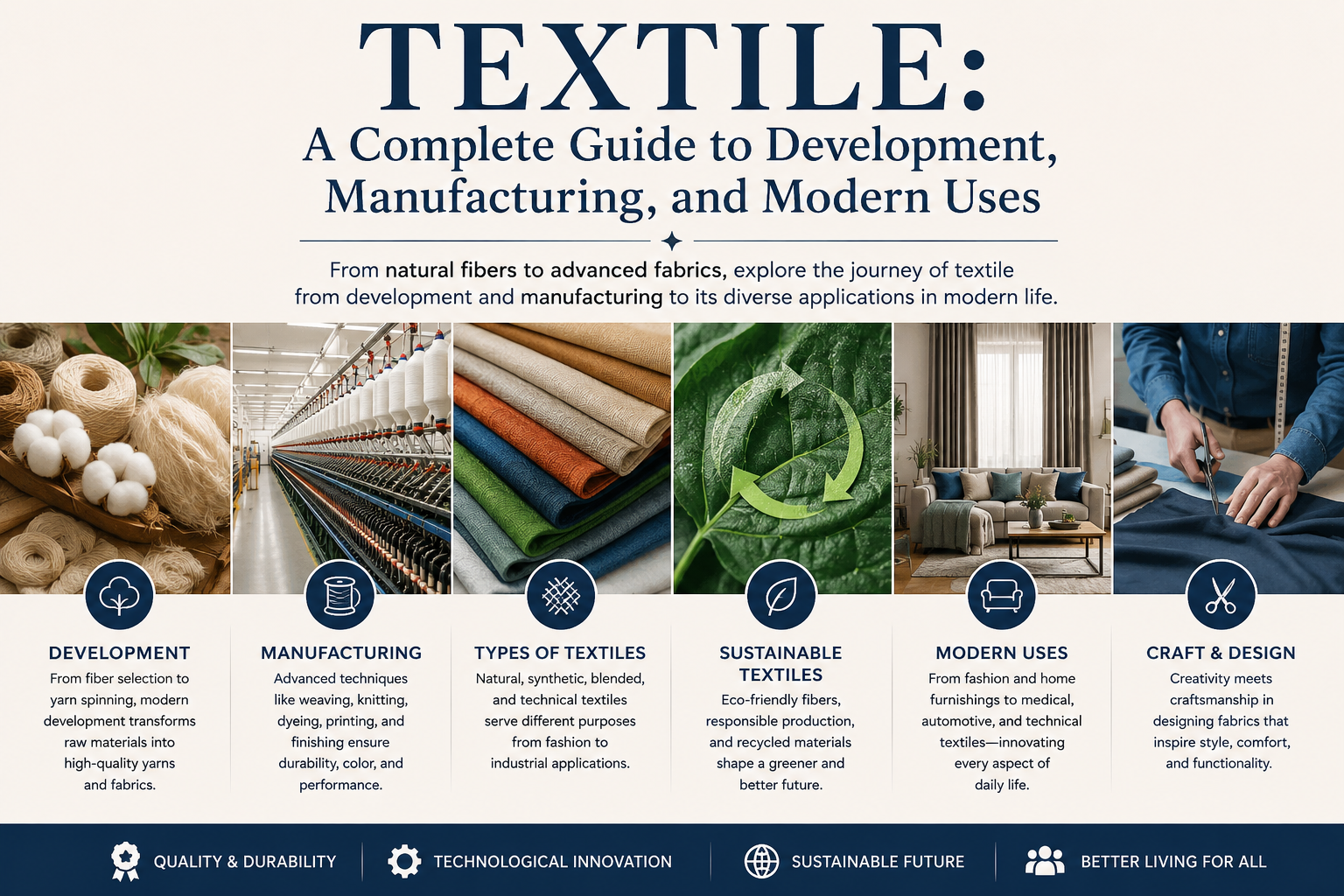
Introduction to Textile
It is believed that the textile sector is among the oldest and most important industries across the globe. From hand-woven, ancient fabrics to the modern-day sustainable materials textiles play an integral function in our daily lives fashion, interior design, fashion as well as healthcare and industrial applications. In simplest terms, textile refers to any fabric made of yarns, fibers, or other materials that are made through knitting, weaving bonds, or other methods of production.
In the present, textile is not limited to clothes. It encompasses technical textiles furniture, textiles for medical use, home furnishings and eco-friendly products designed to safeguard the environmental environment. With the increasing awareness of sustainability and advancing technology and sustainability, the textile industry is constantly changing to meet the needs of the future.
Understanding the Types of Textiles | What Are Textiles
To fully comprehend textile It is crucial to be aware of its major kinds. The classification of textiles is generally by fiber source, structure and use.
1. Natural Textiles
The natural textiles come up of fibres that are derived from animals, plants or minerals. The most common examples are silk, wool, cotton and linen. These fabrics are easy to breathe, soft and are widely used in garments and other household items.
2. Synthetic Textiles
Synthetic textiles are created using chemical processes like nylon, polyester, acrylic and spandex. These fabrics are well-known for their the durability, wrinkle resistance, and efficiency in cost.
3. Blended Textiles
Blended textiles blend synthetic and natural fibers to enhance comfort, performance and endurance. Blends of cotton and polyester are a typical instance.
4. Technical and Nonwoven Textiles
This class includes advanced materials that are used in automotive, healthcare construction, agriculture, and construction. Techniques like the use of Maliwatt or Malivlies can be considered instances of nonwoven textile techniques for development that provide durability and flexibility, without the traditional weaving.
Textile Development: From Fiber to Fabric
It is a complex procedure that transforms natural fibers in to textiles. Every stage plays a crucial function in determining the quality in terms of durability, appearance, and appearance.
Fiber Selection
The process of developing begins with selecting the appropriate fiber based on its intended usage. For instance cotton is the most popular fiber to provide comfort, whereas synthetic fibers are chosen for their strength and durability.
Spinning and Yarn Formation
The fibers get spun to create yarns by traditional or modern methods of spinning. The quality of yarn directly influences what is produced as a textile product.
Fabric Formation
Fabric is made by weaving or knitting, braiding or other nonwoven techniques. Manufacturing, development and manufacturing – handling Maliwatt as well as Malivlies is crucial in creating innovative nonwoven fabrics for use in engineering applications.
Finishing and Treatment
Processings for finishing such as printing, dyeing and chemical treatments improve the appearance, feel, and performance of fabrics.
Textile Manufacturing: Processes and Technologies
The production of textiles has been transformed through the use of technological advancements. Modern machines facilitate more efficient production, a consistent quality and less the amount of waste.
Weaving and Knitting
Weaving can create structured fabrics, such as canvas and denim, while knitting produces flexible fabrics that are that are used in casual and sportswear clothes.
Nonwoven Manufacturing
Nonwoven textiles are produced by gluing fibers mechanically chemically, or even thermally. They are used extensively in hygiene masks, medical products and insulation materials.
Digital Textile Printing
The advent of digital printing revolutionized textile design through the ability to create custom patterns, quicker production and less environmental impact.
Sustainable Textiles and the Textile Certificate of Future
Sustainability is a current aspect of the textile industry. Manufacturers and consumers are becoming conscious of their environmental responsibilities.
What Are Sustainable Textiles
Sustainable textiles are created by using sustainable fibers, low-impact dyes and sustainable manufacturing methods. The organic cotton and recycled polyester and bamboo are all common examples.
Textile Certificate of Future – Sustainable Textiles – Materials Matter
The Textile Certificate of the Future is a commitment to sustainable sourcing, a smaller carbon footprint and longer-term environmental benefits. This idea demonstrates that the materials matter and that choosing sustainable textiles can help protect the environment while also promoting ethical production.
Benefits of Sustainable Textile Practices
Energy and water usage are reduced.
Less pollution and less the disposal of
More secure working conditions
Long-term cost-efficiency
Textile in Fashion and Apparel Industry
Fashion is among the most well-known uses of textile. Designers depend on the latest fabrics to design stylish functional, comfortable clothes.
The fashions in textiles change according to seasons, technological advancements and consumer tastes. Fabrics that breathe, moisture-wicking fabrics and stretchy fabrics are popular in today’s clothing. Sustainable fashion is also causing manufacturers to embrace eco-friendly textiles.
Textile for Home and Interior Use
The role of textiles is crucial in home design and comfort. Curtains and upholstery, carpets and bedding are a great way to enhance both appearance and function.
Sewing Project Shop – Fabric Market Finds – Curtain Fabric Room
A sewing store typically provides unique fabrics that stimulate imagination. Curtain fabric for decorating rooms is chosen based on the quality, texture and color, as well as durability and control of light. The fabric’s quality directly affects the way a room appears and feels.
The home textiles should balance aesthetics with practicality, providing an easy maintenance process and durable performance.
Industrial and Technical Textile Applications
Beyond the fashion industry and for home use, textile has strong industrial significance.
Medical Textiles
For use in masks, surgical gowns, implants, bandages and other garments Medical textiles must meet the highest hygiene and performance standards.
Automotive and Construction Textiles
Airbags, seat covers, insulation roofing materials and other roofing fabrics provide examples for textile applications in these industries.
Agricultural Textiles
Textiles are utilized to protect crops, irrigation control and stabilization of soil, which improves the efficiency and sustainability of your farm.
Challenges Facing the Textile Industry
Despite its expansion, the textile industry is facing a number of issues:
The environmental impact of dyes and other chemicals
The use of energy and water is high.
Fast fashion and waste generation problems
Skills-based labor is required and technological advances
In order to address these issues, we need innovation sustainable practices, sustainable methods and international collaboration.
Future of Textile Industry
The next generation of textile promises to be exciting with the advent of smart textiles, biodegradable material as well as digital manufacturing. Smart textiles are able to monitor health, regulate temperature and react to environmental changes.
Research into the field of fiber and sustainability will influence the field. The main focus will be efficiency as well as innovation and the environment.
Conclusion
It’s more than just fabric. It is the fundamental element of modern living. From home and clothing to industrial and medical applications textiles affect the safety, comfort and design. Understanding the various types of fabrics and development processes techniques for manufacturing, as well as sustainable practices help business and consumers make educated choices.
With advances in technology and a emphasis on sustainability this textile industry is advancing towards an environmentally responsible and smarter future. No matter if you’re exploring textile for fashion, interior design or industrial uses its significance and potential are growing every day.
Must Read: Budget: A Complete Guide to Planning, Controlling, and Managing Finances Effectively